
Recently, many users trying to register Telegram using phone numbers from certain countries or regions have found that they can no longer receive verification codes for free as before. Instead, they are required to pay a fee, usually by purchasing a one-week Telegram Premium subscription, to complete the verification process. This change has emerged in some regions and quickly sparked controversy among users: some see it as a "disguised fee" or "bad practice," while others view it as a necessary compromise for Telegram under real-world pressures.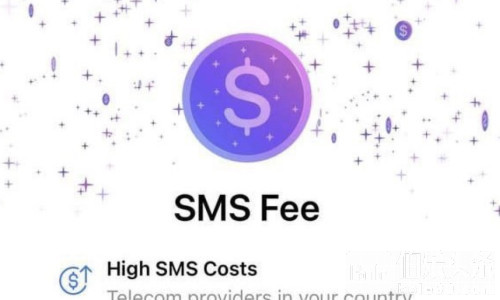
If we only look at the surface issue of "whether registration costs money," it's easy to jump to emotional conclusions. However, when viewed in the context of the global communication platform's challenges with black-market abuse, SMS costs, and risk control pressures, this strategy actually has a clear and practical logic.
Black-Market Abuse Is the Real Starting Point
Among global instant messaging apps, Telegram has long been a "high-frequency platform" for black-market and gray industries. Its open group mechanism, powerful bot ecosystem, and low entry barrier make it a highly flexible communication tool for regular users, but for black-market operators, it is a highly cost-effective "infrastructure."
Whether it's telecom fraud traffic generation, Ponzi scheme recruitment, spam group control, or airdrop phishing bots, the first step is almost always bulk account registration. In this process, SMS verification codes are the core and most direct cost.
For a long time, Telegram has offered free registration verification codes, which is very user-friendly but has also led to a result:
A large number of SMS receiving platforms, virtual numbers, and cheap carrier numbers are used for automated registration, meaning Telegram has effectively been bearing the real international SMS costs for these activities.
When a free mechanism is systematically abused, the platform eventually needs to "hit the brakes."
High-Risk Regions Are Often High-Cost Regions
It is worth noting that Telegram does not charge uniformly for all countries or all numbers. Instead, it triggers the paid registration mechanism specifically for high-risk region numbers. These regions typically share three characteristics:
-
High cost of international A2P verification SMS
-
Active virtual numbers and SMS receiving platforms
-
High rates of bulk registration and black-market usage
Based on user feedback, key regions with a higher probability of triggering paid registration include:
-
🇭🇰 Hong Kong
-
🇮🇳 India
-
🇮🇩 Indonesia
-
🇵🇭 Philippines
-
🇻🇳 Vietnam (some carriers)
-
🇵🇰 Pakistan
-
🇧🇩 Bangladesh
-
🇪🇬 Egypt
-
🇳🇬 Nigeria
-
🇰🇪 Kenya
-
Some Middle Eastern and African countries
It is important to emphasize:
👉 This does not mean users in these countries are "problematic"
👉 Rather, these regions have long been at the intersection of high abuse rates and high SMS costs
For Telegram, these regions are both the "easiest entry points for bulk registration" and areas where "every verification code sent costs real money."
Why Not Charge Directly for SMS, But Guide Users to Purchase Premium?
From a product and risk control design perspective, Telegram's choice to use a "purchase one-week Premium" method, rather than directly labeling it as a "verification code fee," is actually a relatively restrained and smarter strategy.
On the surface, it asks users to "support Telegram";
In reality, it achieves three things simultaneously:
-
💰 Covering high SMS costs
-
🚫 Significantly raising the barrier for black-market bulk registration
-
🧹 Filtering out SMS receiving platforms and script-based registrations
Black-market operators can use scripts to register automatically, but they can hardly complete a real payment process for each account, let alone bear this cost structure long-term. This charging method essentially replaces complex risk control rules with economic costs.
For Ordinary Users: A Burden or a Cost?
From an ordinary user's perspective, this change does cause inconvenience, especially for first-time Telegram users in high-risk regions, who may feel "targeted."
Objectively speaking, this payment is usually only required during the initial registration phase, and the amount is relatively low—it is not a long-term usage cost. Meanwhile, many low-risk countries, physical carrier numbers, and normal device environments can still complete registration for free.
This also indicates that Telegram's goal is not to "make money from registration fees," but to make abusive activities bear their own costs as much as possible.
The Real Trade-Off Between Platform Governance and Freedom
Telegram has long been known for its "free, open, and decentralized" label, but any platform, once it reaches a large user base, inevitably faces governance issues. Paid registration is not about content censorship, but rather an entry-level economic risk control measure.
In today's highly industrialized black-market environment, relying solely on technical risk control and manual review is often more costly and causes more collateral damage. In comparison, using real costs to limit abusive behavior is a relatively moderate and effective approach.
Conclusion
Telegram's implementation of paid registration for numbers from high-risk regions is not a whim, nor is it a simple commercial monetization move. It is a realistic compromise made against the backdrop of continuously rising global SMS costs and persistent black-market abuse.
It sacrifices some "zero-barrier experience" in exchange for a more controllable platform ecosystem. For ordinary users, this may be a minor inconvenience; but overall, it acts more like a "filter" than a "paywall."
In the era of long-term struggle between black markets and platforms, the real question has never been "whether to charge fees," but rather—
who pays for the abuse.






 1
1